



 Brunei Darussalam
 Cambodia
 Indonesia
 Lao PDR
 Malaysia
 Myanmar
 Philippines
 Singapore
 Thailand
 Viet Nam
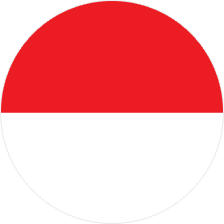
The flag of Indonesia is named Sang Saka Merah-Putih, literally translated as "Red and White Treasure." The red on the upper half of the flag stands for courage and the white on the lower half stands for purity. The flag was used when Indonesia struggled for independence against the Netherlands. In August 1945, during the Proclamation of Indonesian Independence, it was finally adopted as the national flag.
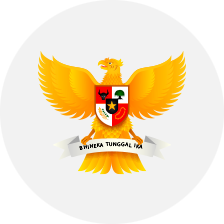
The bird on the national emblem of Indonesia is the Garuda, a legendary bird in traditional epics that represent Indonesia. The color gold represents the nation's greatness, while black represents nature. The 45 feathers on the neck, 8 on the tail, and 17 on each wings symbolize the date of the proclamation of Indonesian independence, which is August 17, 1945. The escutcheon on the body represents the defence of the country. The five sections inside the escutcheon indicate the Pancasila principles, the foundation philosophy of Indonesia. The golden star, chain, banyan tree, bull, and rice and cotton correspond to "Belief in One Supreme God," "Just and Civilised Humanity," "The Unity of Indonesia," "Democracy that is Guided by the Inner Wisdom in the Unanimity Arising Out of Deliberations Amongst Representatives," and "Social Justice for the Entire People of Indonesia," respectively. The lettering in Old Javanese on the banner reads "Unity in Diversity."
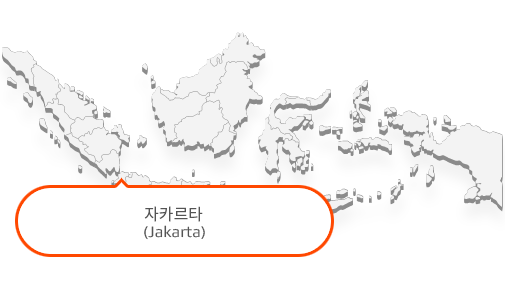
264.16 million
(2018, IMF)
1.9 million ㎢
(9 times larger than the Korean Peninsula)
Republic of Indonesia
Tropical monsoon climate, high temperature and humidity Average
annual temperature: 25–28℃ (Jakarta: 32-33℃); humidity: 73–87%
Muslim (87%), Christian (7%), Catholic (3%), Hindu (2%), Buddhist (1%)
Indonesian (official language), Javanese, and over 600 indigenous local languages
 KOREA FOUNDATION