

본문바로가기

KFKOREA FOUNDATION

SEARCH
search closed

Lao PDR

Lao PDR Flag
Lao PDR
Lao PDR Flag
Flag

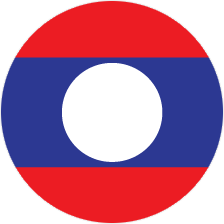
The blue stripe represents the broad territory of Lao PDR as well as the nation's wealth, while the red stripes represent the courage and blood that the nation shed during its struggle for independence. The white circle is a symbol of purity and health.

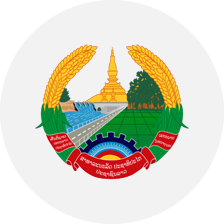
Emblem

On the red ribbon on the lower part of the national emblem of Lao PDR, a lettering that reads "Lao People's Democratic Republic" is inscribed, while the two ribbons on the sides that wrap the rice stalks read "Peace, Independence, Democracy, Unity, Prosperity." In the center of the emblem is placed the national shrine Pha That Luang. The reservoir Nam Ngum, asphalt street, the woods, a stylized watered field, and a gear wheel symbolize development and prosperity of the nation.
Lao PDR Flag
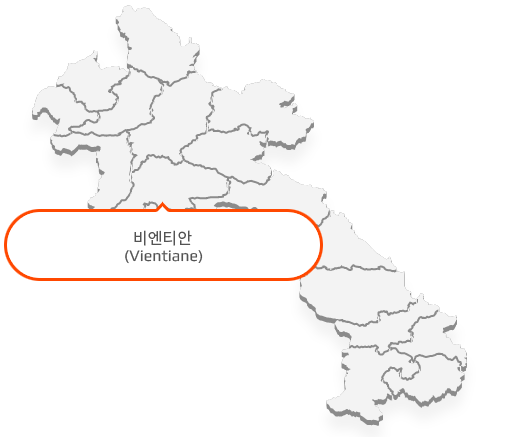
Lao PDR Map
Capital : Vientiane
  • Population

    906 thousand
    (2018, Lao Statistics Bureau)

  • Area

    236,800㎢
    (1.1 times larger than the Korean Peninsula)

  • Time zone

    GMT+7

  • Official name

    Lao People's Democratic Republic

  • Language(s)

    Laotian (has intonation, similar to Thai), 6 intonations in Laotian, 5 in Thai

  • Location

    Inland nation located 14.1–22.3° north latitude and 100–108° east longitude Bordered with five countries: Vietnam to the east (2,069 km), Thailand to the west (1,835 km), Cambodia to the South (435 km), China to the north (505 km) and Myanmar to the northwest (236 km)

  • Climate
    • Average annual temperature: 29℃ (maximum: 39℃ (April), minimum: 11℃ (December))
    • The rainy season is from May to October. The average annual rainfall is 2,045 mm.
    • The dry season is from November to April (rarely rains in December and January).
  • Religion(s)

    Buddhist (69%), folk religion (28%), Christian (1.5%); freedom of religion is guaranteed, but propagation is prohibited.

  • Ethnic groups

    50 official groups (adopted by the National Assembly of Lao PDR in December 2018) - Lao Loum (60%), Lao Theung (30%), Lao Sung (10%), etc.

    • Lao Loum: Literally means "lowland Lao," making up about 60% of the population of Lao PDR. They mostly inhabit along the Mekong River and cultivate paddy fields.
    • Lao Theung: Translates to "midland Lao," making up about 30% of the population of Lao PDR. They mostly engage in Slash-and-burn agriculture.
    • Lao Sung: Literally means "high mountain Lao," comprised of about 10% of the population of Lao PDR. During the Laotian Civil War, the people were divided into the Vientiane and the revolutionary government, which resulted in significant casualties. The Hmong people, who take up the majority among Lao Sung, sided for the United States during the Indochina War, which led them to exile to overseas after the end of the war.

Lao PDR Timeline

  • 8th Century
    • Lao people came south from Southern China
  • 3th Century
    • Established Muangs, or semi-independent city-states, in provincial regions
  • 1354
    • Established Lan Xang, the first unified kingdom
  • 18th Century
    • Lan Xang was divided into 3 kingdoms (Luang Prabang (northern), Vientiane (central), Champasak (southern)) Became vassals to Thailand
  • 1899
    • Became part of French Indochina
  • 1945
    • Declared independence of Lao PDR (October 12)
  • 1954
    • Gained complete independence from France at the Geneva Conference (July 20)
  • 1962
    • The first coalition government was formed with the Geneva Accords on Lao PDR, but collapsed shortly. Conflicts deepened between the Vientiane government (kingdom) and the Pathet Lao (Lao People's Revolutionary Party).
  • 1975
    • Lao People's Revolutionary Party gained power through a bloodless revolution sponsored by Vietnamese forces Declared the Lao People's Democratic Republic (December 2)
  • 1986
    • Implemented a market-oriented economic mechanism at the Fourth country programme for the Lao People's Democratic Republic
  • 1991
    • Adopted the constitution
  • 1992
    • Held the first Laotian parliamentary election
  • 1994
    • Constructed the Lao-Thai Friendship Bridge
  • 1997
    • Joined ASEAN
  • 2004
    • Held the ASEAN Summit
  • 2006
    • Choummaly elected as president
  • 2011
    • Choummaly reelected as president
  • 2012
    • Held the ASEM Summit
  • 2013
    • Joined the WTO
  • 2016
    • Held the ASEAN Summit Commenced the Boten–Vientiane railway project (Aimed to complete by December 2021)
      Bounnhang elected as president


TipUseful information
on the culture of Lao PDR
  • Buddhism is closely related to the lives of Laotians, deeply affecting their beliefs in seeing the world. 69% of the population are Buddhists. Temples function as the core of villages, and monks are the most respected people in society.
  • To become a monk, the approvals of a regional administrative institution and the Lao People’s Revolutionary Youth Union are needed. Abhidhamma Schools for monastic education are located in Vientiane and Luang Prabang.
  • Religion: Buddhist (69%), folk religion (28%), Christian (1.5%), etc.; freedom of religion is guaranteed, but propagation is prohibited.