



 Brunei Darussalam
 Cambodia
 Indonesia
 Lao PDR
 Malaysia
 Myanmar
 Philippines
 Singapore
 Thailand
 Viet Nam
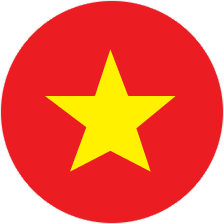
The Vietnamese flag is said to be have been used for the first time in the early 1940s during an uprising against the French. The flag was adopted on September 5, 1945, by Viet Minh leader Ho Chi Minh when proclaimed the independence of Viet Nam. After the First Indochina War on November 30, 1955, the flag was modified to make the rays of the star sharper and used as the flag of North Viet Nam. Later, in 1976, the flag was adopted as the flag of the unified Viet Nam. The red background symbolizes bloodshed and the national spirit. The five golden rays of the star represent the unity of workers, peasants, intellectuals, youths (or businessmen) and soldiers.
The national emblem of Viet Nam has a red background, a golden star, and a cog that represents the prosperity of Viet Nam. There is also a scroll with the inscription "Socialist Republic of Viet Nam." Rice ears surround the whole emblem.

94.58 million
(2018, IMF)
330,341㎢
(1.5 times larger than the Korean Peninsula)
Socialist Republic of Viet Nam
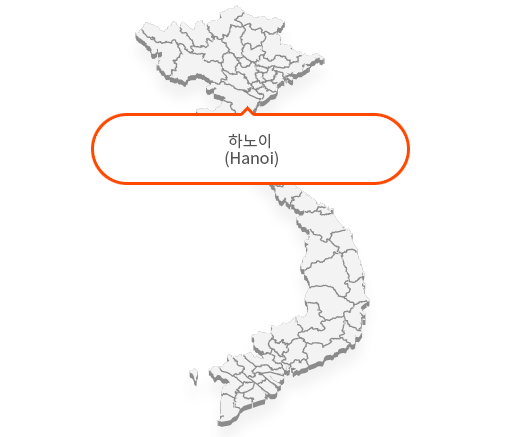
In the middle of the Indochina Peninsula; bordered with China, Laos, and Cambodia
Vietnamese (86%) and 53 other minority groups
Buddhist (12%), Roman Catholic (7%), etc.
Vietnamese (official language)
Subtropical in the northern region, tropical monsoon in the southern region
 KOREA FOUNDATION